SELLING YOUR HOME
Is Home Staging Worth It?
The Math That Will Change How You Think About Selling Your Home
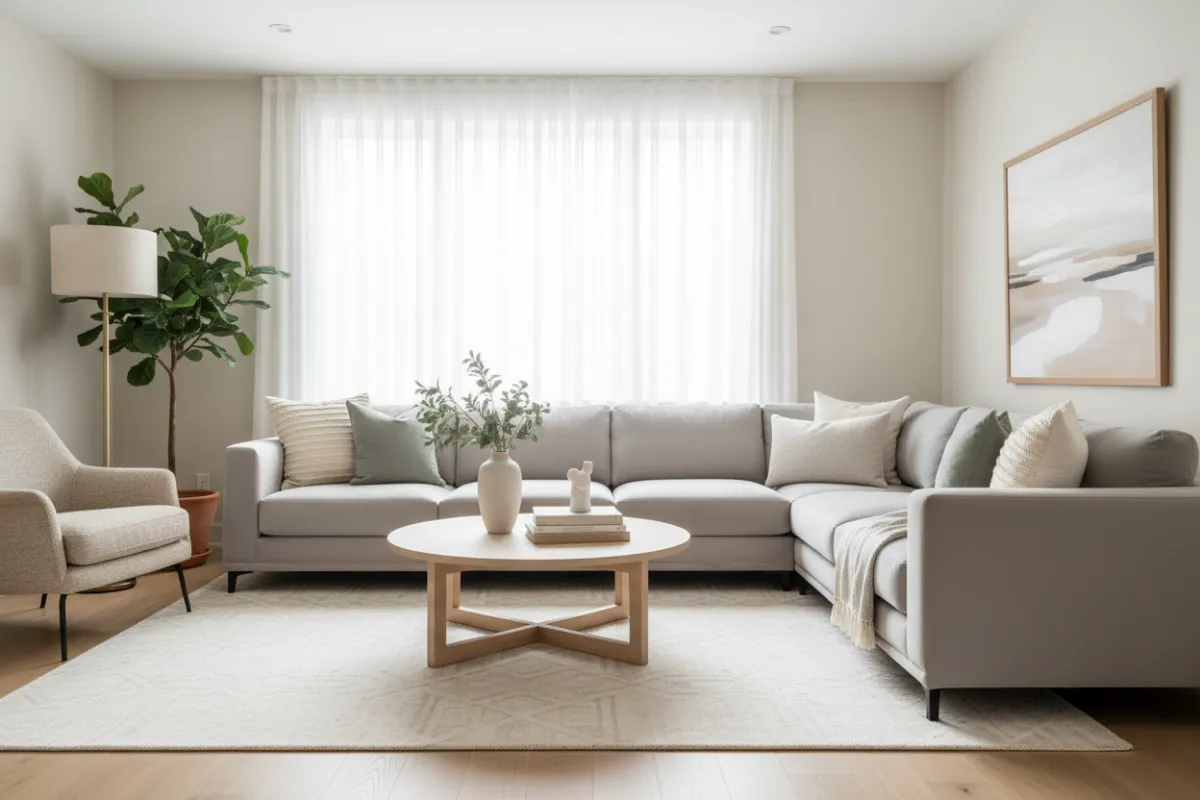
A few years ago, a homeowner sat across from me at her kitchen counter and asked the question every seller eventually asks:
"Do I really need to stage? It seems like a lot of money for furniture nobody's going to keep."
I understood why she asked. When you're selling, the checks are flying out the door — repairs, painting, movers — and staging looks like the one line you could cross off the list. It's an investment, and every seller wants to know their investments will pay off.
But here's what I've learned after years of watching homes sell — and watching homes sit: the expensive decision isn't staging. The expensive decision is skipping it. It costs you twice — once in the months your home lingers on the market, and again in the offers that never reach top dollar.
She didn't quite believe me yet. So I didn't answer her with design talk. I answered her with a calculator.
What does an unsold home actually cost every month?
Here's the number almost nobody runs before they list: the monthly cost of a home that hasn't sold yet.
Let's use a $500,000 home as our example, with a typical mortgage - 20% down, a $400,000 loan at 5%. Watch what happens every 30 days that home sits on the market:
The mortgage payment alone is about $2,147 a month. Property taxes add roughly $458. If there's an HOA, call it $420. The home still needs to be lit, cooled, and show-ready, so utilities run around $275. Insurance adds about $150 more.
That's approximately $3,450 every single month - for a home you're trying to leave.
One extra month on the market: $3,450. Two months: nearly $7,000. Three months: over $10,000. And that's before a single price reduction, which is what usually comes next when a home lingers. In other words, an unsold home doesn't just sit there. It sends you a bill.
Do staged homes really sell faster?
This is where the two numbers meet, because the entire financial case for staging comes down to one question: does it shorten the timeline?
The data says yes, consistently. According to the National Association of REALTORS® 2025 Profile of Home Staging, 49% of sellers' agents report that staged homes spend less time on the market than comparable unstaged homes, and nearly 85% of realtors agree a staged home sells faster than an unstaged one. Industry studies from the Real Estate Staging Association put the difference at 33-50% faster. Zillow data shows staged homes averaging around 11 days on the market, while unstaged homes stretch to 30 or more.
Why? The psychology is simple, and it's the same reason I talk about on every page of this site: buyers don't choose a home with logic alone. They walk in asking questions they never say out loud - Can I picture my life here? - and a staged home answers yes before their brain catches up. In fact, 83% of buyers' agents say staging makes it easier for their clients to visualize the property as their future home.
Buyers who can picture their life in a home make offers. Buyers who can't keep looking.
Does staging increase the sale price too?
Here's the part that turned my kitchen-counter conversation around completely.
Staging doesn't just compress the timeline - it tends to lift the number at the top of the contract. Nearly three out of ten agents in the NAR study report that staging increased the dollar value offered by 1% to 10%. On our $500,000 example, that's an additional $5,000 to $50,000 at the closing table.
Stop and look at the low end of that range. Even a 1% bump - the worst outcome the data suggests - often covers the entire cost of staging by itself. Before you count a single month of carrying costs you didn't have to pay.
So the honest math looks like this: staging is one of the only selling expenses with a real chance of paying you back twice. Once in the sale price. And again in every mortgage payment, tax bill, and utility check you never wrote because the home sold in weeks instead of months.
That homeowner at the kitchen counter? We staged. Her home went under contract in eight days, with more than one offer to choose from. The staging bill was real - but it was the smallest number in the story.
Why An Empty Home Is The Most Expensive Way To Sell
You may not think your home belongs on the next episode of Selling Sunset or Million Dollar Listing New York. But think about every beautiful home you've ever watched sell - on TV, on social media, in a friend's triumphant "SOLD" post. Not one of them was empty.
There's a reason for that. Today's buyers arrive with an expectation: if you really want top dollar, the home should look move-in ready. Like all you need is your suitcase and a bottle of wine, and you're set.
"An empty home says 'moved out.' A staged home says 'moving in.'
And when you're selling, what your home communicates is everything."
So what should you do before you list?
Not every home needs full professional staging - and I'll be the first to tell you when it doesn't. Sometimes a few strategic moves create the entire effect: the right furniture placement, fresh paint in the right rooms, lighting that makes buyers slow down in the doorway.
The goal isn't to spend the most. It's to spend wisely, on the improvements that change what buyers believe about your home the moment they arrive.
That's exactly what a consultation is for. Before you spend a dollar preparing your home for sale, let's figure out which improvements will create the greatest impact - and which ones you can confidently skip. Because the most expensive decision you can make isn't staging.
It's waiting.
Ready to find out what your home is communicating?
Let's start with one question: what are you trying to accomplish?